
enero 28, 2026/
No Comments
Share this... Facebook Pinterest Twitter Linkedin

Was it Really All About a Flower Vase?...Discover how one key day in Bogotá became the beginning of a much bigger national story.
What comes to your mind when you think about Colombia's Independence Day?
Perhaps you imagine flags, parades, traditional music, or the famous Flower Vase of Llorente.
The vase is an important symbol, but Colombia's independence was much more than one argument inside a shop. July 20, 1810, marked the beginning of a long political and social process involving citizens, leaders, soldiers, and communities from different regions.
In 1810, Spain was experiencing a serious political crisis. In the New Kingdom of Granada, many local leaders wanted a greater role in government.
On July 20, a group of Creoles planned to ask Spanish merchant José González Llorente to lend them a flower vase. They expected a negative response that could create public tension. The discussion became a reason to gather people in the streets and demand political change.
That day, a Supreme Governing Junta was formed in Santafé. This weakened the authority of the colonial government, although the new Junta still recognized the king at first. This was considered a revolutionary step, rather than the complete end of Spanish rule.
July 20, 1810, started a new political period, but the struggle continued. Different provinces formed governments, defended regional interests, faced internal disagreements, and fought against the return of Spanish control.
Nine years later, on August 7, 1819, the patriot army won the Battle of Boyacá. This victory allowed the republican forces to secure Santafé and much of the central region of New Granada. It became a decisive moment in the military consolidation of independence.
Here is the key difference: July 20 began the political process, while August 7 strengthened it through a decisive military victory.
Colombia's independence was not created only in Bogotá. Towns, provinces, rural communities, women, Indigenous people, Afro-descendant communities, soldiers, workers, and political leaders formed part of a complex historical process.
This diversity is an important part of Colombia's heritage. It also helps us understand that a country is always built through many voices, experiences, and memories.
Independence Day invites Colombians to think about freedom, citizenship, and participation. Freedom also brings responsibilities: respecting others, protecting democratic spaces, learning from history, and contributing to the community.
Our homeland is more than a place on a map. It includes our landscapes, languages, traditions, memories, and people. Together, these elements shape our national identity.
At St. Mary's College, learning about Colombian history in English creates a real connection between language and culture. Through the Natural Interactive Methodology, students practise communicative English while exploring their own country. This is practical learning with a meaningful purpose.
Pretty cool, right?


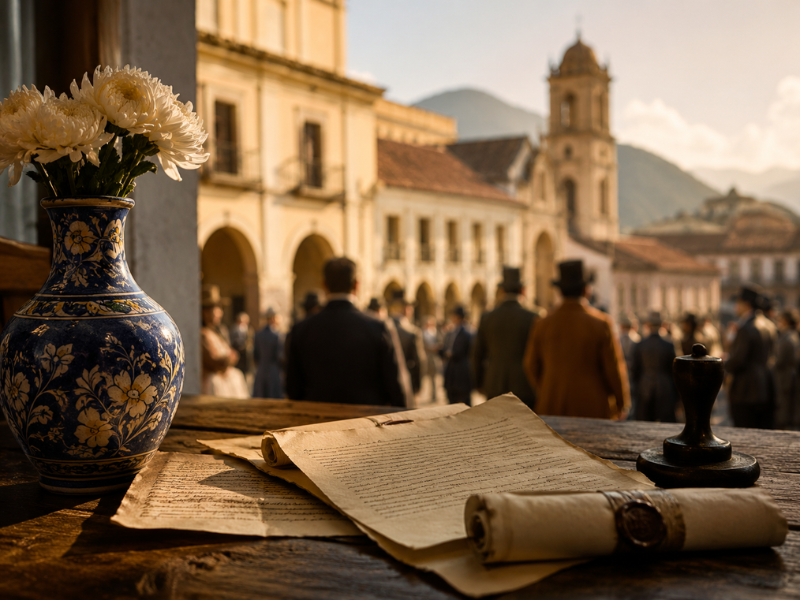
The famous Flower Vase of Llorente still exists and is preserved at the Museum of Independence in Bogotá. However, historians explain that the vase incident was part of a planned political strategy, rather than a simple spontaneous argument.
"It was the beginning of a long process."
→ Fue el comienzo de un proceso largo.
"People wanted political change."
→ Las personas querían un cambio político.
"History has many different voices."
→ La historia tiene muchas voces diferentes.
Share this... Facebook Pinterest Twitter Linkedin

Cuando prepararse es avanzar Uno de los mayores retos de la educación actual es la deserción universitaria temprana. En América...
Histórico de Ganadores del Triwizard Tournament en St. Mary’s College ¡Bienvenidos a St. Mary’s College! 🌟 Donde la magia del...